What ornithologists mean by dawn chorus
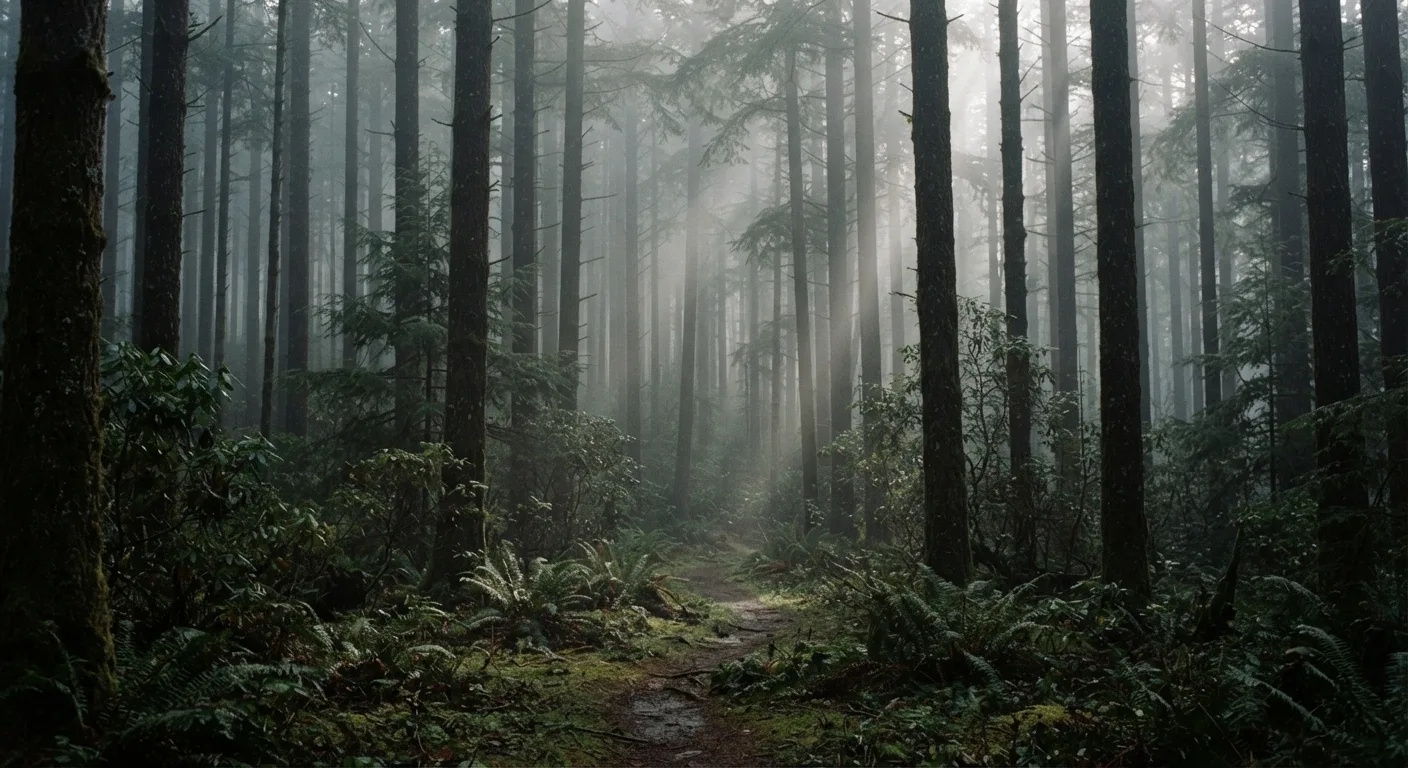
Staicer and colleagues review dawn singing as coordinated avian communication: males advertise territory and quality before foraging intensifies; species stagger peak times by niche — thrushes before warblers in many temperate communities.[1] Light intensity gates onset more tightly than clock time alone; cloud cover delays chorus. Rattenborg's comparative sleep work notes birds sleep yet mount intense dawn output — chorus is timed biological behaviour, not random morning noise.[2] Simulated chorus should ramp intensity over 20–40 minutes, not start at full density instantly.
Acoustic structure: density, frequency, and spatial spread
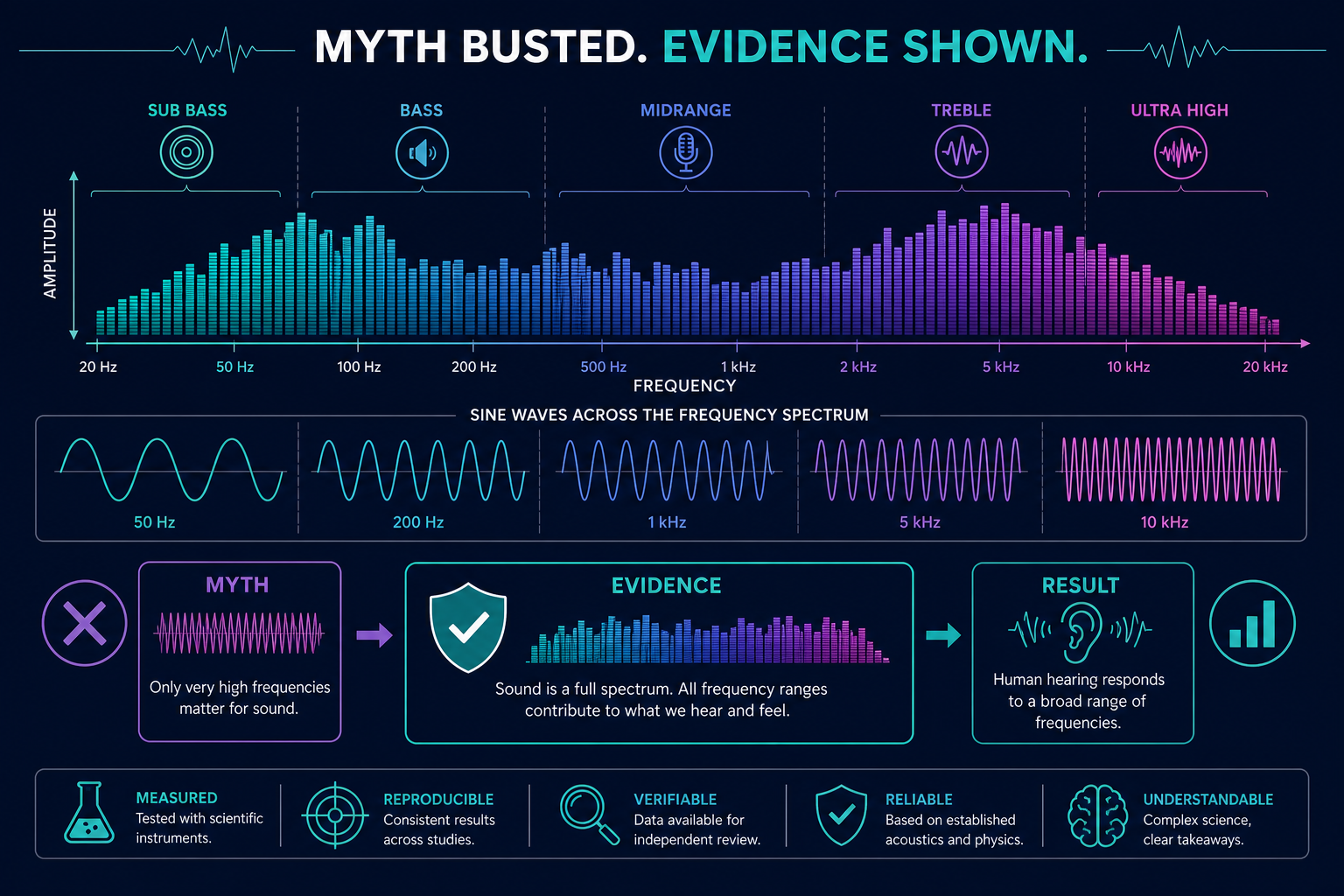
Real chorus exhibits high species diversity — multiple frequency bands occupied simultaneously. Bregman's scene analysis predicts listeners parse spatially separated streams; mono single-species loop fails ecological validity.[14] Place thrush bubble left-mid, finch bubble right-near, distant crow far-back at low volume. Hedblom linked perceived bird sound richness to restorative ratings in urban green surveys.[7] Density matters: sparse winter dawn differs from May peak — season parameter is scientific accuracy, not decoration.
Human circadian interface: light first, sound second
Wright's entrainment studies place suprachiasmatic light input as primary zeitgeber; chorus alone cannot fix phase disorders.[6] Thapan showed morning light amplifies cortisol awakening response — acoustic ramp complements photic input when blackout curtains or winter latitude limit light.[3] Alvarsson's stress-recovery work used nature including bird-like spectra for autonomic downshift after stress — orthogonal to wake timing but relevant for gentle arousal.[4]
Psychological wellbeing evidence
Ratcliffe's experiments linked birdsong richness to self-reported wellbeing and restoration — laboratory doses, not decade epidemiology.[5] Hunter's scoping review aggregates nature-sound calm reports with heterogeneous physiology.[8] Dawn chorus science supports plausible morning cue; it does not replace CBT-I, melatonin protocols, or alarm schedules for rigid commitments. Keep backup alarm when trains must catch.
Urban attenuation and substituted chorus
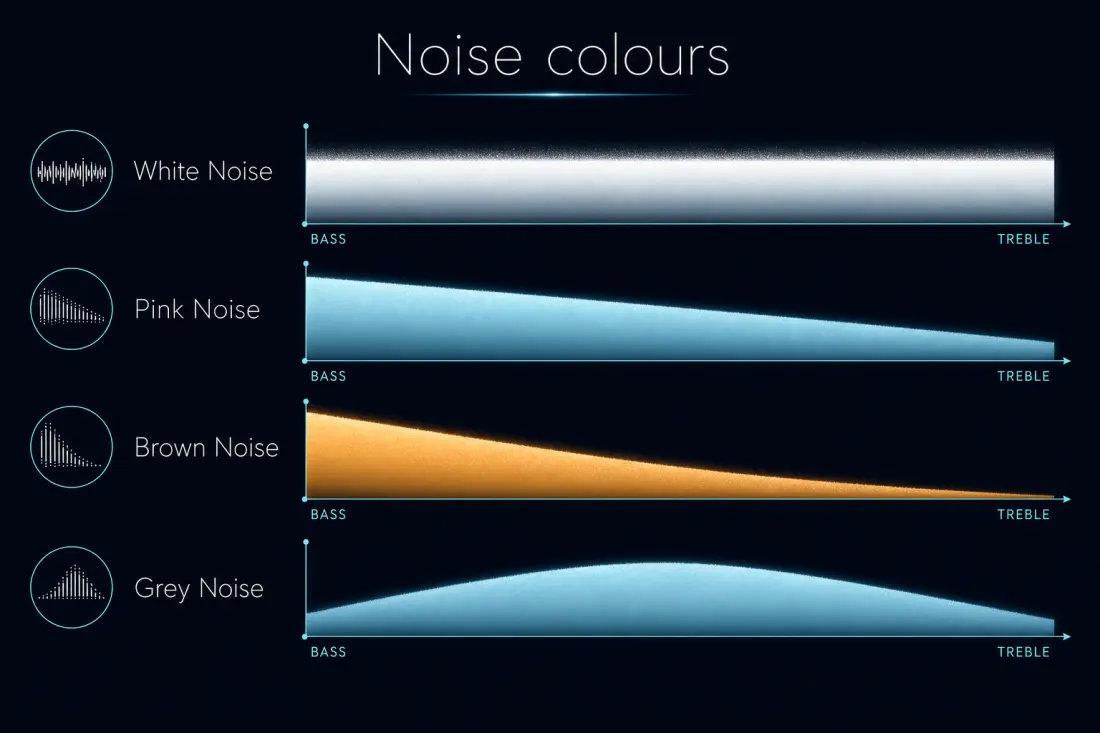
City bedrooms receive traffic-masked chorus attenuation — recorded dense chorus restores acoustic cue when parks are absent. Masking literature supports soft brown bed under birds so sudden honks lose contrast without raising bird layer to painful SPL.[15][18] Basner's population noise-health reviews cap comfortable exposure regardless of content beauty.[19]
Building a scientifically shaped dawn garden
- Schedule volume ramp 15–30 minutes before target wake.[1][13]
- Minimum three species bubbles at different Falloff.[14]
- Match seasonal density — sparse winter, rich spring.[1]
- Add optional distant water — many chorus habitats include stream.[4]
- TimeLine Drift for inter-bird timing — no grid chirping.[9]
- Pair with morning light when possible.[3]
Adolescent phase delay and school schedules
Teen circadian phase delay makes pre-7am full chorus biologically misaligned for some — ramp should match actual wake goal, not romantic 5am meadow. Wright and adolescent sleep literature support later weekend recovery; weekday compromise uses gentler density.[6] Schools and parents should not weaponise chorus as guilt — companion tool only.
Recording ethics and biodiversity context
Field recordings carry habitat context — declining species richness in some regions means historical chorus tapes sound denser than modern local reality. Science communication opportunity: appreciate substituted chorus while supporting urban greening that restores real birds. Hunter notes health evidence gap for long-term simulated-only exposure.[8]
Species timing and staggered onset in playback design
Staicer's reviews describe staggered species peaks — thrushes often lead, later migrants join as light rises. Replicating one uniform chirp density from second zero violates the biology listeners subconsciously know.[1] TimeLine ramp should introduce species bubbles sequentially over tens of minutes: first distant robin-like layer, then mid warblers, then optional crow far-back after twenty minutes. Ratcliffe's wellbeing work used perceived richness — stagger increases richness without raising SPL.[5] Hedblom's urban restoration surveys tie perceived biodiversity to restoration scores; playback diversity is not vanity, it matches ecological signal structure.[7] Avoid looping identical thirty-second dawn clips; Rankin habituation arrives fast when inter-arrival intervals freeze.[9]
Companion listening in Sound Bubbles
Research above concerns clinical and laboratory sound — not a playlist guarantee. Sound Bubbles offers adjustable living gardens: spatial layers, coloured noise beds, Medical & Wellbeing rooms, and easy mute. Use recommended gardens as environmental support alongside medical care when appropriate.[20]
Not treatment. See clinicians for diagnosis, medication, CBT, neurologic music therapy, or tinnitus programmes. Keep volume comfortable; stop if symptoms worsen.
Why this supports Sound Bubbles — not just "any ambient app"
Most ambient apps deliver one file. The studies above rarely study "a loop." They study continuous floors against irregular noise, unintelligible speech against memory tasks, nature scenes against stress markers, spatial streams against glued mashups, and slow environmental change against habituation.[9][14][22][23][24]
Sound Bubbles maps onto those findings deliberately: brown/noise beds for masking floors, nature and library layers for restorative structure, distance/Falloff for speech intelligibility control, and TimeLine motion so the garden keeps the statistics of a place instead of the statistics of a four-minute loop.[12][15][16][25] That is the practical reason the product feels different after the first hour — and the scientific reason the difference matters.
How to apply this inside Sound Bubbles
- Open a related garden (or New Garden) and press Start playing so audio unlocks.[9]
- Expand Shape your soundscape → Sounds: set Master Volume, then Falloff while watching the audible-core guide.[10]
- Select a bubble; drag and scroll depth. Prefer raising one bubble's Volume over blasting the whole room.[11]
- Add library rain, nature, or noise layers; keep speech-like content distant — or remove it — when you need reading or coding focus.[12]
- TimeLine: choose Drift, Tide, or Orbit when you want the garden to keep evolving without grabbing attention.[13]
- Brown Noise tab: shape a warm floor, optionally Release as bubble so it becomes spatial.[14]
- Save gardens that still feel kind after an hour — public gardens should stay soft, not startling.[15]
Limits, safety, and honest uncertainty
We do not claim Sound Bubbles replaces clinical care, sleep medicine, occupational health programmes, or psychiatric treatment.[1][7] What the product does offer is a listening architecture that matches how hearing and attention actually work: layered sources, spatial distance, and slow change instead of one brittle loop.[18][19]
If sound worsens symptoms, stop. If you need medical advice, see a clinician. If you want a softer room, open a garden, place the bubbles kindly, and stay honest about what sound can — and cannot — do.[20][21]
How this article was researched
We combine first-hand experience placing and tuning Sound Bubbles gardens with citations from peer-reviewed journals, reviews, and institutional pages (including NIH/NCBI, sleep and hearing literature, acoustics, and attention research). Where evidence is mixed or early, we say so. On wellbeing topics we stay cautious: these are companion soundscapes, not cures.
References
Sources cited in this article. Prefer primary literature and institutional guidance; Sound Bubbles is not a medical device and these citations do not imply clinical endorsement.
- (2004). The dawn chorus and avian communication. Advances in the Study of Behavior. doi:10.1016/S0065-3454(04)34001-2
- (2006). Sleep in birds: evolutionary and ecological perspectives. Brain Research Bulletin. doi:10.1016/j.brainresbull.2006.06.012
- (2001). Light and the cortisol awakening response. Journal of Endocrinology. doi:10.1677/joe.0.1690205
- (2010). Nature sound stress recovery. IJERPH. doi:10.3390/ijerph7031036
- (2013). Birdsong and psychological wellbeing. Journal of Environmental Psychology. doi:10.1016/j.jenvp.2013.08.004
- (2013). Entrainment of the human circadian clock. Current Biology. doi:10.1016/j.cub.2013.08.034
- (2014). Birdsong and perceived restoration. Urban Forestry & Urban Greening. doi:10.1016/j.ufug.2014.07.013
- (2019). Evidence for nature sound and health. IJERPH. doi:10.3390/ijerph16173003
- (2009). Habituation revisited. Neurobiology of Learning and Memory. doi:10.1016/j.nlm.2008.09.015
- (2009). Habituation: a history. Neurobiology of Learning and Memory.
- (1963). Perception and the conditioned reflex. Pergamon Press.
- (2010). The free-energy principle. Nature Reviews Neuroscience. doi:10.1038/nrn2787
- (2013). Whatever next? Predictive brains. Behavioral and Brain Sciences. doi:10.1017/S0140525X12000477
- (1990). Auditory Scene Analysis. MIT Press.
- (2012). An Introduction to the Psychology of Hearing. Brill.
- (2024). Colors of noise. Encyclopedic.
- (2013). Acoustical terminology (masking). ANSI.
- (2014). Auditory and non-auditory effects of noise on health. The Lancet. doi:10.1016/S0140-6736(13)61613-X
- (2021). World report on hearing. WHO.
- (2023). Noise and hearing loss prevention. CDC.
- (2005). White noise on sleep with ICU noise exposure. Sleep Medicine. doi:10.1016/j.sleep.2004.12.004
- (2001). Auditory distraction and short-term memory. Human Factors. doi:10.1518/001872001775992390
- (2010). Stress recovery with nature sound. IJERPH. doi:10.3390/ijerph7031036
- (2005). Speech intelligibility and work performance. Indoor Air. doi:10.1111/j.1600-0668.2005.00391.x