
Where sleep and focus apps break
Neural outputs can harbour micro-seams, pitch wobble, and phonetic debris — prediction-error spikes at 3am.[8] Stanchina's masking work assumed continuous statistically stable beds; AI wander violates that without careful post-processing.[5] Nature stress-recovery studies used recognisable natural scenes — synthetic uncanny rain may not reproduce autonomic benefits.[6]
Scene analysis and mushy mixes
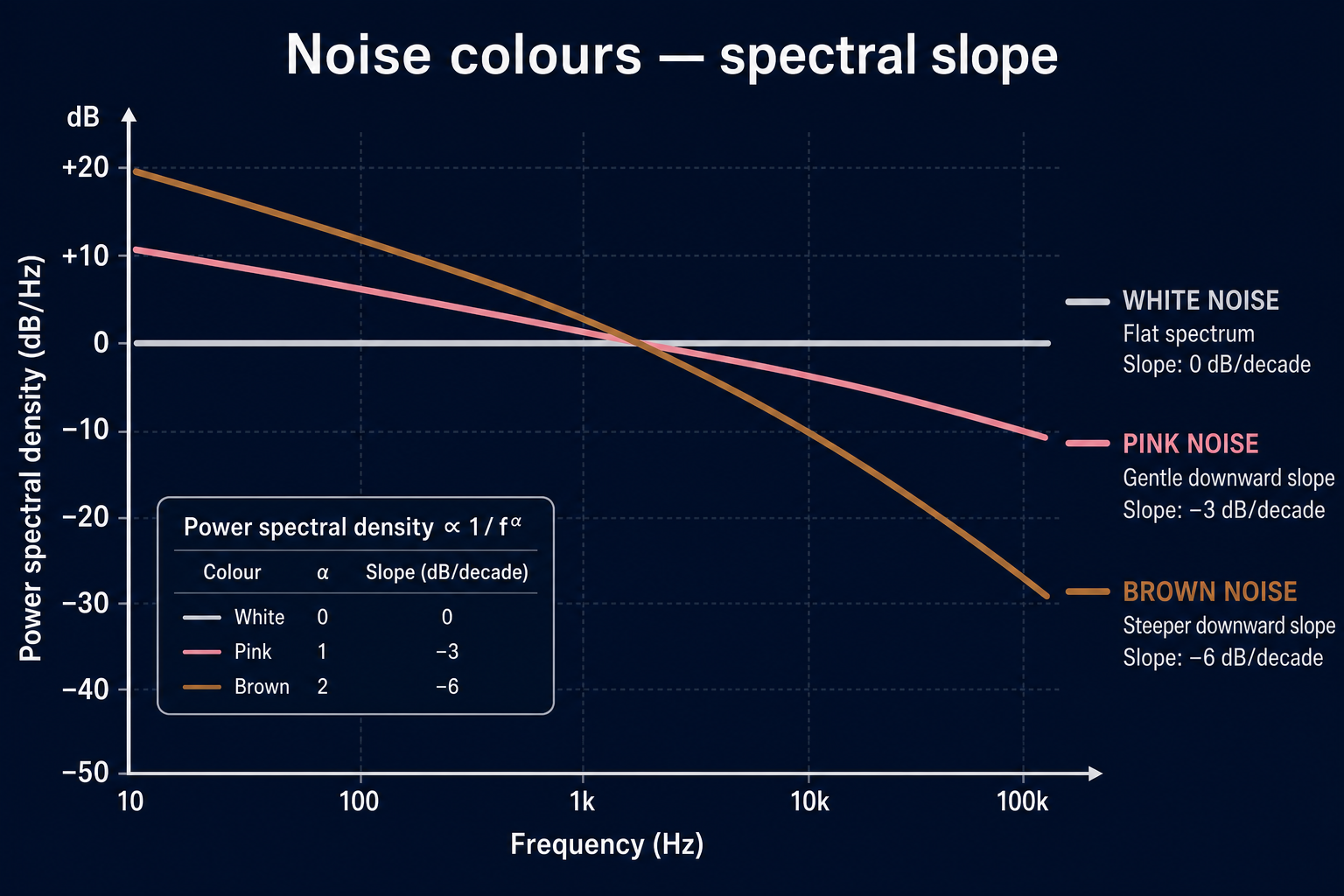
Bregman requires separable streams for perceptual stability.[4] End-to-end stereo mush prevents user placement control — everything sits in one phantom centre. Sound Bubbles' bubble architecture keeps AI layers optional future imports, not mandatory mono porridge.
Ethics: data, attribution, biosphere
Training on copyrighted field recordings without consent litigates creator livelihoods and indigenous sound heritage. Disclosure when audio is synthetic matters for trust — especially medical-adjacent wellbeing categories. Environmental claims ("Amazon rainforest") need honest sourcing.

Human curation loop
Best pipeline: AI proposes textures; human engineers set levels, high-pass rumble, loop points, and spatial roles; listening tests at 45+ minutes for seam detection per Rankin habituation criteria.[3] Fully automated infinite streams skip QA at listener expense.
Loudness and health
Generative models optimise perceptual loudness — risk of fatigue. Basner's dose framework still applies.[7] Normalise conservatively; never compete with traffic via volume.
Hybrid future
- Procedural rain statistics + neural micro-variation
- User-placed bubbles with AI-generated one-shots on TimeLine
- Personalised gardens within safe loudness caps
Summary
AI soundscapes expand creative supply but do not automatically solve wellbeing acoustics. Stable floors, spatial design, and ethical training data remain human responsibilities.[1][4][5]
Quality assurance checklist
Before shipping AI ambience: 60-minute listening test, spectrogram seam hunt, phonetic debris audit, loudness normalisation to EBU-friendly integrated loudness, spatial stem separation check. Rankin habituation criteria: does minute 55 feel identical to minute 5?[3]
Regulatory and medical framing
Do not label AI sleep sound as clinical tinnitus therapy without trials — companion framing only. Basner dose warnings belong in onboarding.[7]
Human-in-the-loop curation at Sound Bubbles scale
Community gardens benefit from moderator listening audits — AI-assisted asset gen still needs human pop of seam bombs. Transparency labels ("synthetic rain layer") build trust with medical-adjacent users.
Companion listening in Sound Bubbles
Research above concerns clinical and laboratory sound — not a playlist guarantee. Sound Bubbles offers adjustable living gardens: spatial layers, coloured noise beds, Medical & Wellbeing rooms, and easy mute. Use recommended gardens as environmental support alongside medical care when appropriate.[20]
Not treatment. See clinicians for diagnosis, medication, CBT, neurologic music therapy, or tinnitus programmes. Keep volume comfortable; stop if symptoms worsen.
Why this supports Sound Bubbles — not just "any ambient app"
Most ambient apps deliver one file. The studies above rarely study "a loop." They study continuous floors against irregular noise, unintelligible speech against memory tasks, nature scenes against stress markers, spatial streams against glued mashups, and slow environmental change against habituation.[9][14][22][23][24]
Sound Bubbles maps onto those findings deliberately: brown/noise beds for masking floors, nature and library layers for restorative structure, distance/Falloff for speech intelligibility control, and TimeLine motion so the garden keeps the statistics of a place instead of the statistics of a four-minute loop.[12][15][16][25] That is the practical reason the product feels different after the first hour — and the scientific reason the difference matters.
How to apply this inside Sound Bubbles
- Open a related garden (or New Garden) and press Start playing so audio unlocks.[9]
- Expand Shape your soundscape → Sounds: set Master Volume, then Falloff while watching the audible-core guide.[10]
- Select a bubble; drag and scroll depth. Prefer raising one bubble's Volume over blasting the whole room.[11]
- Add library rain, nature, or noise layers; keep speech-like content distant — or remove it — when you need reading or coding focus.[12]
- TimeLine: choose Drift, Tide, or Orbit when you want the garden to keep evolving without grabbing attention.[13]
- Brown Noise tab: shape a warm floor, optionally Release as bubble so it becomes spatial.[14]
- Save gardens that still feel kind after an hour — public gardens should stay soft, not startling.[15]
Limits, safety, and honest uncertainty
We do not claim Sound Bubbles replaces clinical care, sleep medicine, occupational health programmes, or psychiatric treatment.[1][7] What the product does offer is a listening architecture that matches how hearing and attention actually work: layered sources, spatial distance, and slow change instead of one brittle loop.[18][19]
If sound worsens symptoms, stop. If you need medical advice, see a clinician. If you want a softer room, open a garden, place the bubbles kindly, and stay honest about what sound can — and cannot — do.[20][21]
How this article was researched
We combine first-hand experience placing and tuning Sound Bubbles gardens with citations from peer-reviewed journals, reviews, and institutional pages (including NIH/NCBI, sleep and hearing literature, acoustics, and attention research). Where evidence is mixed or early, we say so. On wellbeing topics we stay cautious: these are companion soundscapes, not cures.
References
Sources cited in this article. Prefer primary literature and institutional guidance; Sound Bubbles is not a medical device and these citations do not imply clinical endorsement.
- (2009). Habituation revisited. Neurobiology of Learning and Memory. doi:10.1016/j.nlm.2008.09.015
- (2009). Habituation: a history. Neurobiology of Learning and Memory.
- (1963). Perception and the conditioned reflex. Pergamon Press.
- (2010). The free-energy principle. Nature Reviews Neuroscience. doi:10.1038/nrn2787
- (2013). Whatever next? Predictive brains. Behavioral and Brain Sciences. doi:10.1017/S0140525X12000477
- (1990). Auditory Scene Analysis. MIT Press.
- (2012). An Introduction to the Psychology of Hearing. Brill.
- (2024). Colors of noise. Encyclopedic.
- (2013). Acoustical terminology (masking). ANSI.
- (2014). Auditory and non-auditory effects of noise on health. The Lancet. doi:10.1016/S0140-6736(13)61613-X
- (2021). World report on hearing. WHO.
- (2023). Noise and hearing loss prevention. CDC.
- (2005). White noise on sleep with ICU noise exposure. Sleep Medicine. doi:10.1016/j.sleep.2004.12.004
- (2001). Auditory distraction and short-term memory. Human Factors. doi:10.1518/001872001775992390
- (2010). Stress recovery with nature sound. IJERPH. doi:10.3390/ijerph7031036
- (2005). Speech intelligibility and work performance. Indoor Air. doi:10.1111/j.1600-0668.2005.00391.x