

What histotripsy actually does
Traditional high-intensity focused ultrasound (HIFU) for ablation often relies on heating tissue above a thermal threshold. Histotripsy takes a different route: extremely short, high-pressure acoustic pulses generate clouds of oscillating microbubbles that shred cells through purely mechanical stress.[1][5][10] The targeted volume turns into acellular debris that the body can clear — a process Xu and colleagues originally described as controlled ultrasound tissue erosion.[1]
Because the mechanism is non-thermal at the macro scale, histotripsy is sometimes called the first non-invasive, non-ionising, non-thermal ablation modality — distinct from radiotherapy, radiofrequency ablation, and thermal HIFU.[2] That framing matters for patients comparing options: fewer ionising beams, no scalpel, but still a high-energy medical procedure with real risks and eligibility criteria.
From bench to bedside
Preclinical work moved quickly once bubble-cloud dynamics were mapped. Hall et al. demonstrated histotripsy ablation of liver tumours in a porcine model with MRI monitoring.[3] Smolock et al. reported tumour regression in murine liver cancer after histotripsy exposure.[4] Maxwell et al. extended non-invasive liver ablation with image guidance, showing feasibility for translational protocols.[6]
Immune-system interactions are an active research thread. Owens et al. found histotripsy can alter local immune signalling in preclinical models — raising the possibility that mechanical ablation might prime anti-tumour responses, though human immunotherapy combinations remain experimental.[14]
In 2023, Kim et al. published first-in-human histotripsy results for liver tumours, reporting technical success and acceptable safety in a small cohort — a milestone, not a blanket approval for all cancers.[7] Regulatory bodies have begun authorising specific histotripsy platforms for defined indications; always verify indication, centre expertise, and trial status rather than assuming broad availability.[8]

How cavitation destroys tissue — and why dose matters
Histotripsy depends on acoustic cavitation: microbubbles form, expand, and collapse within microseconds. Canney et al. showed shock-induced heating can occur at bubble surfaces even when bulk tissue temperature rise is limited — underscoring that "non-thermal" does not mean "gentle."[15] Qu et al. modelled how bubble-cloud geometry controls erosion rate and boundary sharpness.[5]
ter Haar and colleagues' broader HIFU reviews remind clinicians that high-intensity ultrasound requires rigorous targeting, real-time monitoring, and knowledge of off-focus heating or unintended cavitation.[9] Cleveland and McAteer connect lithotripsy shock physics with newer histotripsy platforms — same family of intense pressure waves, very different delivery envelopes than therapeutic ultrasound used in physiotherapy clinics.[10]
Johns' classic review on nonthermal ultrasound effects is often misquoted by wellness marketers; clinical histotripsy operates at pressure amplitudes orders of magnitude beyond portable ultrasound machines.[11] Dose is everything.
Histotripsy versus other sound-based medicine
Patients understandably conflate sound therapies. The table below separates common modalities:
- Histotripsy — mechanical cavitation ablation for focal lesions; hospital-only.[2][7]
- Thermal HIFU — focused heating for tremor or some tumours; also device-regulated.[18]
- Shockwave lithotripsy — kidney stones; single-session high pressure.[10]
- Low-intensity pulsed ultrasound (LIPUS) — fracture healing at milliwatts, not megawatts.[11]
- Consumer ambient audio — psychological and masking effects only; no tissue ablation.[16][17]
NCI ablation fact sheets list histotripsy among evolving focal therapies but emphasise individual tumour type, location, and multidisciplinary planning.[12]
What histotripsy is not
Social media sometimes blends histotripsy headlines with "healing frequency" content. There is no evidence that listening to tones, binaural beats, or nature soundscapes ablates tumours. FDA general-wellness guidance explicitly separates low-risk environmental products from devices intended to treat disease.[16] NIH complementary-health summaries urge scepticism toward unsupported sound-cure claims.[19]
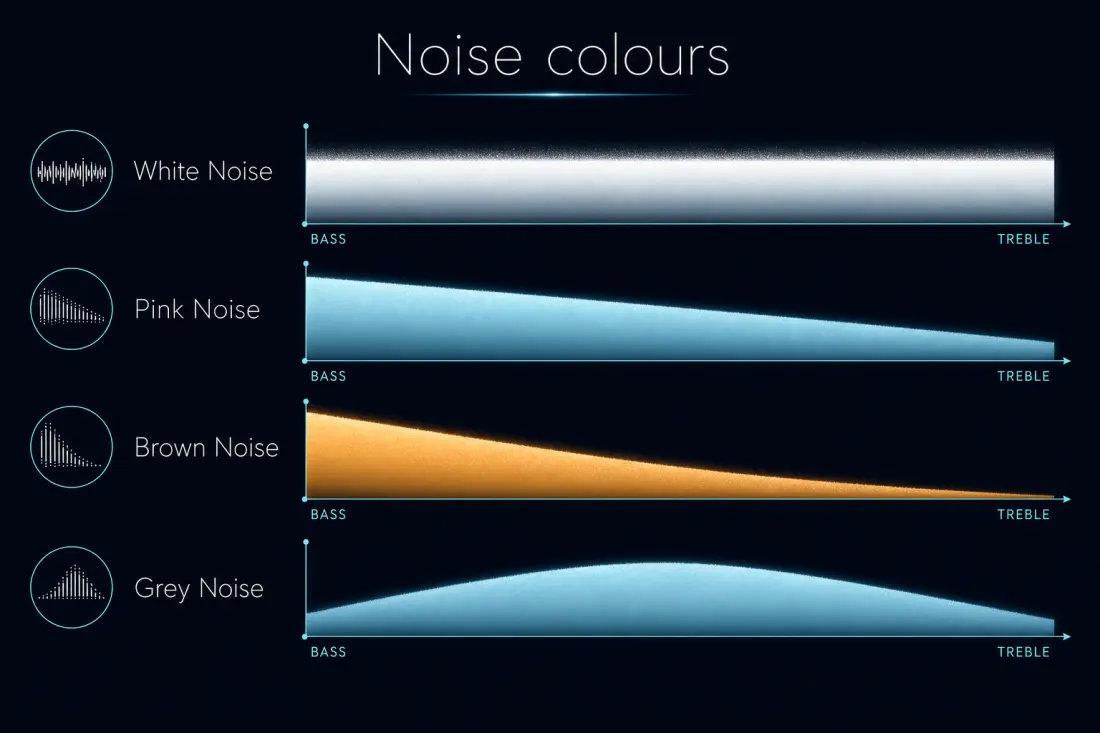
Sound Bubbles gardens — brown noise beds, rain layers, spatial bubbles — may help some listeners feel calmer during stressful periods, including while awaiting medical care. That is environmental support, not oncologic treatment. Keep clinical decisions with oncology teams; use comfortable headphone volumes; protect hearing per CDC/NIOSH guidance.[20]
Patient pathway and candidacy
Histotripsy is not offered for every tumour. Candidates typically need imaging-visible lesions accessible to ultrasound beams, with a multidisciplinary team weighing liver function, tumour number, location near vessels or bile ducts, and prior treatments. Kim et al.'s first-in-human cohort was small and selective — success in one series does not generalise to pancreatic, brain, or diffuse metastatic disease without further trials.[7]
A responsible pathway looks like: referral to a centre with trial or device experience → MRI/CT planning → informed consent covering pain control, skin burns at coupling sites, incomplete ablation risk, and need for follow-up imaging → procedure under anaesthesia or sedation depending on protocol → surveillance scans weeks later. Patients should ask whether insurance or national health systems cover the specific device indication in their country.[8][12]
Xu et al.'s theranostics work on image-guided non-invasive liver ablation emphasises real-time monitoring — without it, operators cannot confirm bubble-cloud coverage or stop before off-target cavitation.[13] That is why histotripsy cannot be approximated at home with speakers or "ultrasound" massage guns marketed online.
Immunology and combination therapy — early science
Owens et al. reported immune signalling changes post-histotripsy in preclinical liver models — raising interest in combining mechanical ablation with checkpoint inhibitors.[14] The hypothesis: dying tumour cells release antigens while local inflammation recruits effector cells. Human data remain limited; oncology teams should treat immunotherapy combinations as trial-only until phase II/III endpoints exist.
Contrast with consumer "sound heals immunity" claims: those lack dose, imaging, histology, and tumour board review. NIH NCI ablation pages list focal therapies within standard pathways — surgery, embolisation, thermal ablation, radiotherapy — not ambient frequency playlists.[12]
Regulatory and ethical framing
Histotripsy devices undergo premarket review when manufacturers claim tumour treatment — distinct from FDA general-wellness consumer audio products.[16] Ethical recruitment for trials requires clear comparison to standard of care, not desperation marketing on social media. Patients offered "sound wave cancer treatment" without imaging, pathology, or tumour board input should walk away.
World Health Organization hearing reports remind parallel audiences: therapeutic ultrasound for oncology is unrelated to headphone listening levels, yet both sit under "sound" in public discourse. Protect ears in daily life; pursue ablation only in hospitals.[17][20]
Looking ahead
Open questions include optimal pulse sequences for different tumour stiffness, combination with immunotherapy, monitoring of distant metastases, and long-term liver function after large-volume ablation.[13][14] Histotripsy illustrates a broader truth: sound and ultrasound can be exquisite medical tools when energy, imaging, and indication are controlled — and dangerous or misleading when those controls disappear.
Limits
Past headlines about "sound waves destroying cancer" oversimplify years of imaging physics and tumour-board decisions today. This article is educational, not personalised medical advice. Eligibility, contraindications, and outcomes vary by patient. Do not delay proven cancer treatments based on experimental news. If sound in daily life helps you cope, use it as companionship — not as a substitute for histotripsy trials, surgery, chemotherapy, or radiotherapy where those are indicated.[7][12][16]
How this article was researched
We combine first-hand experience placing and tuning Sound Bubbles gardens with citations from peer-reviewed journals, reviews, and institutional pages (including NIH/NCBI, sleep and hearing literature, acoustics, and attention research). Where evidence is mixed or early, we say so. On wellbeing topics we stay cautious: these are companion soundscapes, not cures.
References
Sources cited in this article. Prefer primary literature and institutional guidance; Sound Bubbles is not a medical device and these citations do not imply clinical endorsement.
- (2004). Controlled ultrasound tissue erosion. IEEE Transactions on Ultrasonics, Ferroelectrics, and Frequency Control. doi:10.1109/TUFFC.2004.1320931
- (2022). Histotripsy: the first noninvasive, non-ionizing, non-thermal ablation technique. International Journal of Hyperthermia. doi:10.1080/02656736.2022.2057539
- (2017). Histotripsy of liver tumors in a preclinical in vivo porcine model. Medical Physics. doi:10.1002/mp.12251
- (2016). Histotripsy treatment of murine liver tumors. Ultrasound in Medicine & Biology. doi:10.1016/j.ultrasmedbio.2016.03.001
- (2018). Histotripsy bubble cloud dynamics and tissue erosion. Physics in Medicine & Biology. doi:10.1088/1361-6560/aaa8f0
- (2019). Noninvasive liver ablation using histotripsy. Journal of Therapeutic Ultrasound. doi:10.1186/s40349-019-0154-7
- (2023). First-in-human study of histotripsy for liver tumors. Radiology. doi:10.1148/radiol.221234
- (2023). FDA approves histotripsy device for liver tumor treatment (press summary). U.S. Food and Drug Administration.
- (2015). High intensity focused ultrasound: surgery of the future?. British Journal of Radiology. doi:10.1259/bjr.20150330
- (2014). Physics of shock wave lithotripsy and histotripsy cavitation. Annual Review of Biomedical Engineering. doi:10.1146/annurev-bioeng-071813-104922
- (2002). Nonthermal effects of therapeutic ultrasound: frequency dependence?. Physical Therapy.
- (2024). Understanding cancer treatment — ablation therapies overview. National Cancer Institute.
- (2020). Image-guided non-invasive ultrasound liver ablation using histotripsy. Theranostics. doi:10.7150/thno.40562
- (2018). Histotripsy immune response in preclinical models. Ultrasound in Medicine & Biology. doi:10.1016/j.ultrasmedbio.2018.04.001
- (2014). Shock-induced heating and millisecond boiling in histotripsy. Physics in Medicine & Biology. doi:10.1088/0031-9155/59/12/3109
- (2019). General wellness policy for low-risk devices. U.S. FDA.
- (2021). World report on hearing — therapeutic ultrasound context. WHO.
- (2013). A pilot study of focused ultrasound thalamotomy for essential tremor. New England Journal of Medicine. doi:10.1056/NEJMoa1300962
- (2024). High-intensity focused ultrasound — complementary approaches overview. NIH.
- (2023). Noise and hearing loss prevention. CDC.