
Music therapy — relationship, goals, credentials
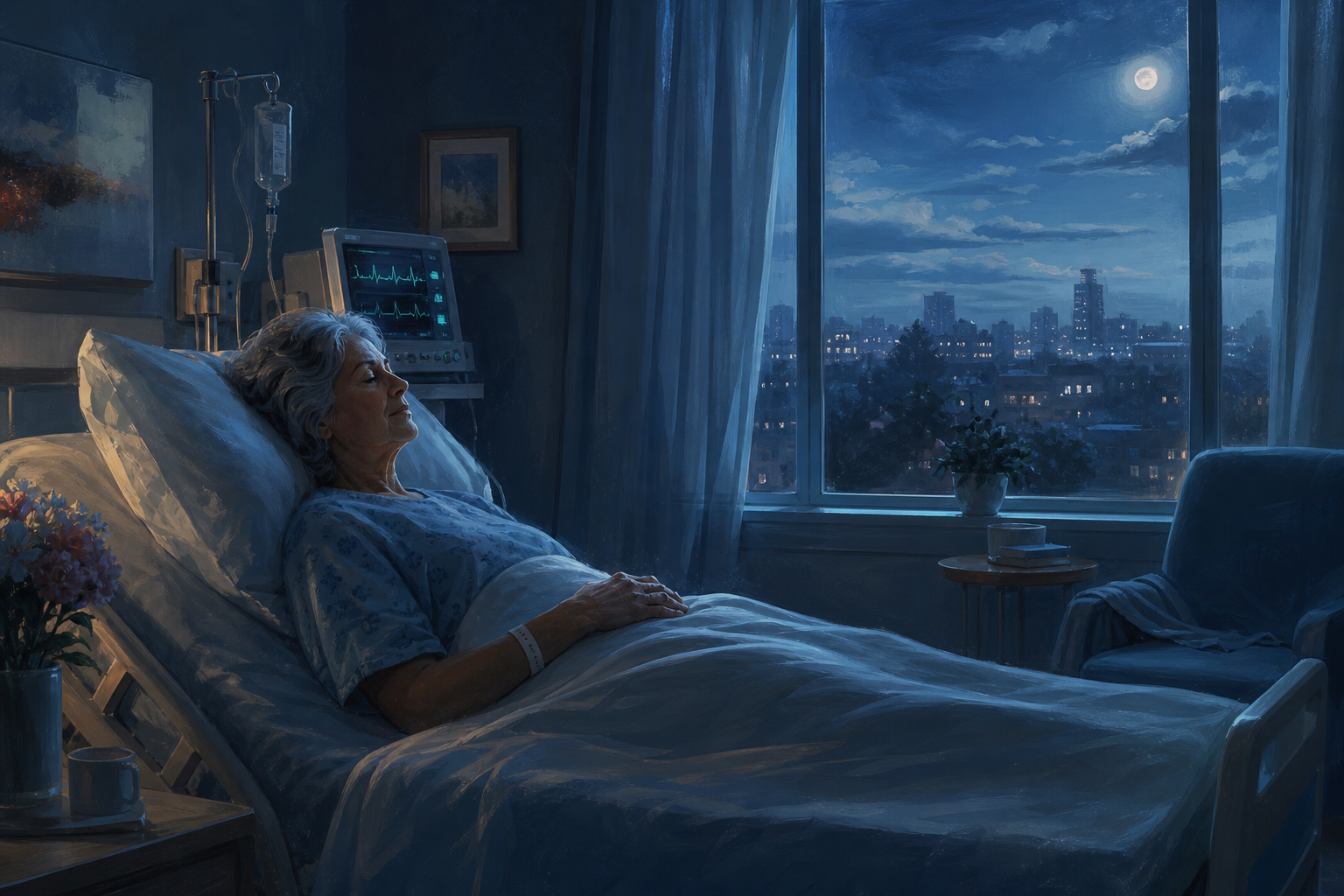
The American Music Therapy Association defines music therapy as the clinical use of music interventions by a credentialed professional to accomplish individualised goals within a therapeutic relationship.[1] The World Federation of Music Therapy emphasises assessment, planning, evaluation, and ethical practice across cultures.[2] In the United States, the MT-BC credential marks board-certified training.[19]
Evidence: Cochrane reviews report anxiety and mood benefits in many pooled trials — Bradt on anxiety/depression, Bradt on ventilated patients, Gold on autism contexts with caveats.[3][9][15] Hole’s Lancet perioperative meta-analysis supports music medicine even without a therapist present — but selection and timing still matter.[8] de Witte’s stress-reduction meta-analysis reinforces adjunctive framing.[11]
Sound therapy — three clinical meanings
“Sound therapy” has no single trademark. Responsible usage usually points to one of:
- Tinnitus sound therapy — enrichment or masking within counselling frameworks (TRT, progressive management). Henry et al. review sound therapy as habituation support, not silence chasing.[4][5]
- Vibroacoustic therapy (VAT) — low-frequency vibration delivered through chairs or mattresses, often paired with music; Skille and Wigram document Scandinavian clinical development.[6][12]
- Auditory/sensory integration — speech-language and occupational contexts for processing disorders; ASHA notes evidence variability by population.[13]
Wellness stores often use “sound therapy” for singing bowls, frequency videos, or binaural apps — categories NIH NCCIH warns may outrun data.[10]
Neurologic music therapy — a music-therapy specialty
Neurologic music therapy (NMT) is standardised music therapy applied to sensorimotor, speech, and cognitive rehabilitation — Thaut’s protocols, not generic calm.[7] Särkämö’s stroke listening trials show cognitive recovery benefits with structured music exposure — still research protocol, not any playlist.[16]
Side-by-side comparison
| Dimension | Music therapy | Clinical sound therapy | Consumer ambient (e.g. Sound Bubbles) |
|---|---|---|---|
| Provider[19] | MT-BC / licensed equivalent | Audiologist, therapist, trained VAT operator | Self-serve app |
| Assessment[1] | Required individual plan | Audiogram, tinnitus match, contraindications | None |
| Typical goal[3] | Mood, expression, rehab, pain adjunct | Habituation, vibration analgesia, processing | Masking, focus, comfort |
| Evidence base[5][8] | Cochrane, Lancet meta-analyses | Tinnitus reviews; VAT pilot trials | Extrapolated from environmental studies[17][18] |
| Regulatory frame[14] | Healthcare service | Clinical device/settings in VAT cases | General wellness |
Tinnitus and CAPD — when “sound therapy” is clinical
Tinnitus sound therapy under audiologist care uses matched or neutral enrichment at safe levels — Henry’s review stresses counselling plus sound, not sound alone.[5] Central auditory processing disorder interventions may use filtered speech, environmental modification, and FM systems — ASHA documents variable evidence by age and comorbidity.[13] These paths look nothing like 432 Hz YouTube streams.
Insurance, billing, and scope fights
Music therapy services may bill under defined CPT contexts when delivered by credentialed providers with documented medical necessity — policies vary by payer and nation.[1] Consumer apps cannot bill insurance because they sell environment, not assessed care. VAT may sit between device and therapy depending on jurisdiction — another reason precise terminology matters for reimbursement and liability.[12]
Music medicine without a therapist — still not random audio
Hole’s perioperative meta-analysis included recorded music chosen by patients or staff — benefit without a credentialed therapist in the room.[8] That is sometimes called music medicine: preselected audio for a defined clinical moment (pre-op, recovery), not ongoing psychotherapy. Even here, trials control timing, volume, and lyric content; they do not validate infinite spa streams.
Environmental masking trials (Riedy et al.) study broadband noise for sleep continuity — audiology-adjacent, not music therapy, yet sold beside “sound therapy” apps.[17] Nature-sound stress recovery (Alvarsson) is laboratory listening with measured autonomic endpoints — extrapolated carefully to companion gardens, not to cure claims.[18]
When a product says “therapeutic,” ask: who assessed you, what outcome was measured, and what adverse events were tracked? If the answer is none, you are in consumer wellness — legitimate if labelled honestly.[14]
Why the confusion hurts patients
Hospitals that label hallway harpists as “sound therapy” may skip credentialed music therapists while also skipping acoustic engineering. Patients who buy “sound therapy cures anxiety” kits may delay CBT or medication. Scoping reviews note benefits and adverse responses — supervision matters.[20]
Paediatric and geriatric naming collisions
Paediatric OT may use “sound therapy” for sensory diets — weighted protocols distinct from adult tinnitus care. Geriatric units play personalised playlists for dementia agitation — Särkämö-adjacent engagement without claiming cure.[16] Same words, different manuals — ask which manual applies before evaluating evidence.
Gold’s Cochrane contexts on autism remind that music therapy goals vary by developmental profile — social communication versus sensory regulation — reinforcing individualised plans over generic “calm rain.”[9]
Sound Bubbles — third category, named honestly
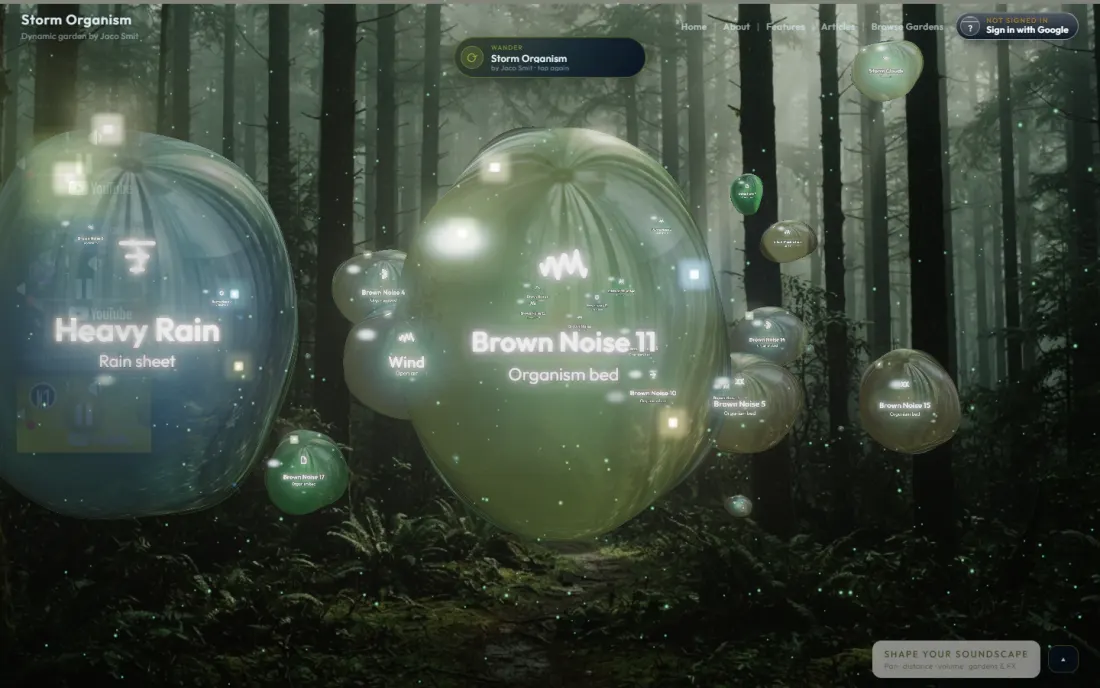
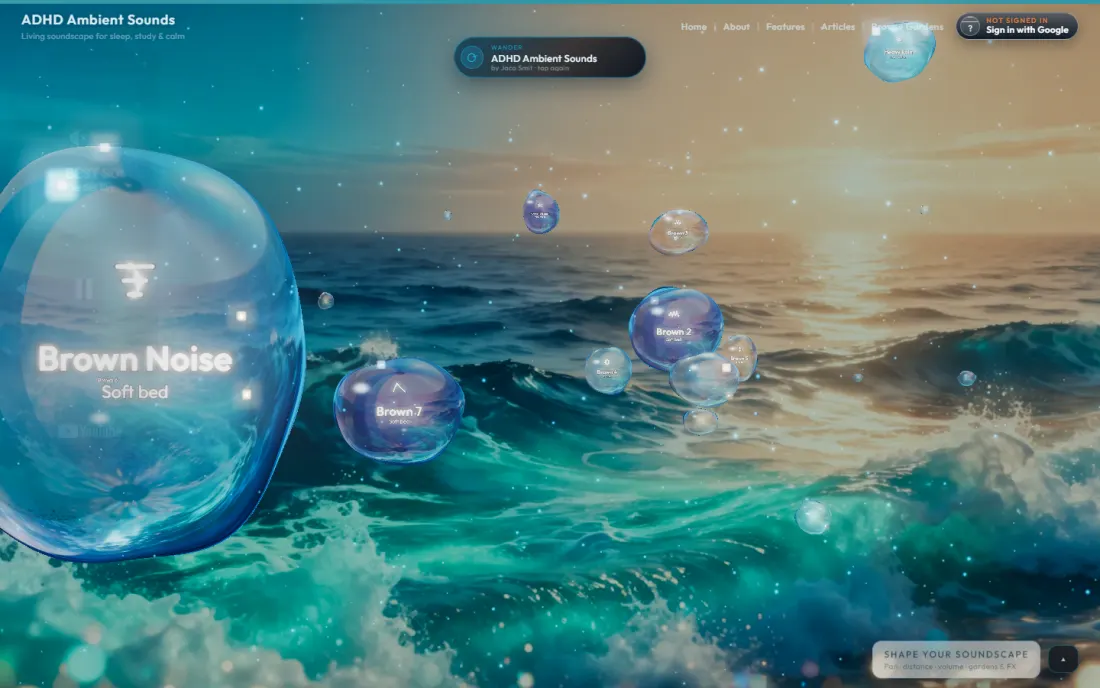
Sound Bubbles is a companion soundscape: spatial bubbles, coloured noise beds, nature layers, Falloff, mute. It borrows design logic from masking and nature-recovery literature without claiming therapy credentials.[14][18] If you need music therapy, ask for MT-BC services. If you need tinnitus care, see audiology. If you want a softer room while studying or recovering at home, use a garden — quietly.
Glossary for confused patients
Music therapist — credentialed clinician using music toward documented goals.[1] Music medicine — recorded/live music in defined clinical moment, sometimes without therapist present.[8] Sound enrichment — audiology-managed tinnitus background.[5] VAT — vibroacoustic transducer therapy.[6] Companion soundscape — user-controlled environmental audio without assessment.[14]
FAQ
Can I call my Spotify habit music therapy? Only if a credentialed music therapist is treating you with documented goals.[1]
Is tinnitus masking the same as brown noise? Masking is one tool within audiology care — often enrichment, not cover-up war.[5]
What is Sound Bubbles? Companion soundscape — wellness audio, third category.[14] Useful for environmental calm when honestly labelled.
Choosing the right lane for your goal
Anxiety reduction may invite Bradt-style music medicine or MT-BC care depending on severity and comorbidity. Tinnitus demands audiology. Stroke gait demands NMT/RAS. Sleep maintenance in a noisy apartment may invite masking beds at conservative volume — Riedy’s review context.[3][5][7][17] Misaligned category expectations cause most disappointment — not absence of any effect. Ask twice if unsure; app store labels are marketing-first.[14]
Key takeaways
- Music therapy requires credentialed clinicians and individualised plans.[1]
- Clinical sound therapy spans tinnitus care, VAT, and audiology — not one brand.[4][6]
- NMT is specialised music therapy for neuro rehab — Thaut protocols.[7]
- Consumer ambient is a third category — honest wellness, not silent therapy.[14]
- Ask providers which category you are receiving before expecting outcomes.[19]
Limits
Passive listening does not replicate therapist relationship, TRT counselling, or VAT dosimetry. Perioperative music benefits do not certify random YouTube frequencies. Stop if sound worsens symptoms; seek licensed care for clinical goals.[1][4][14] When in doubt, ask providers: “Is this MT-BC care, audiology sound therapy, or wellness audio?” Three answers, three expectation sets.[19] Clarity at intake prevents disappointment at discharge.[10]
How this article was researched
We combine first-hand experience placing and tuning Sound Bubbles gardens with citations from peer-reviewed journals, reviews, and institutional pages (including NIH/NCBI, sleep and hearing literature, acoustics, and attention research). Where evidence is mixed or early, we say so. On wellbeing topics we stay cautious: these are companion soundscapes, not cures.
References
Sources cited in this article. Prefer primary literature and institutional guidance; Sound Bubbles is not a medical device and these citations do not imply clinical endorsement.
- (2024). Scope of music therapy practice. AMTA.
- (2023). What is music therapy. WFMT.
- (2021). Music interventions for anxiety and depression. Cochrane Database of Systematic Reviews.
- (2003). Tinnitus retraining therapy. International Tinnitus Journal.
- (2016). Sound therapy for tinnitus management. Journal of the American Academy of Audiology.
- (2008). A comprehensive guide to music therapy and vibroacoustic therapy. Jessica Kingsley Publishers.
- (2015). Neurologic music therapy in sensorimotor rehabilitation. Oxford Handbook of Neurologic Music Therapy.
- (2015). Music as an aid for postoperative recovery in adults. The Lancet. doi:10.1016/S0140-6736(15)60169-6
- (2006). Music therapy for autism spectrum disorder. Cochrane Database.
- (2024). Sound and music based interventions. NIH.
- (2020). Music therapy for stress reduction: systematic review and meta-analysis. Health Psychology Review.
- (1991). Vibroacoustic therapy — historical development. Music Therapy Perspectives.
- (2023). Auditory processing and sound-based interventions. ASHA.
- (2019). General wellness policy for low-risk devices. U.S. FDA.
- (2014). Music interventions for mechanically ventilated patients. Cochrane Database.
- (2008). Music listening enhances cognitive recovery after stroke. Brain. doi:10.1093/brain/awn085
- (2021). Noise as a sleep aid: A systematic review. Sleep Medicine Reviews. doi:10.1016/j.smrv.2020.101385
- (2010). Stress recovery during exposure to nature sound and environmental noise. IJERPH. doi:10.3390/ijerph7031036
- (2024). Music therapist credentials (MT-BC). CBMT.
- (2025). Effects of sound interventions on mental stress response in adults. PMC.