
Treatment arcs are loud
Cancer treatment spans infusion bays, radiation vaults, inpatient wards, and sleepless nights at home. Bradt's Cochrane evidence supports music for anxiety and quality-of-life endpoints across settings — especially when patients choose material meaningful to them.[1] Hole's Lancet meta-analysis extended music benefits to perioperative pain and anxiety — relevant to cancer surgeries.[2]
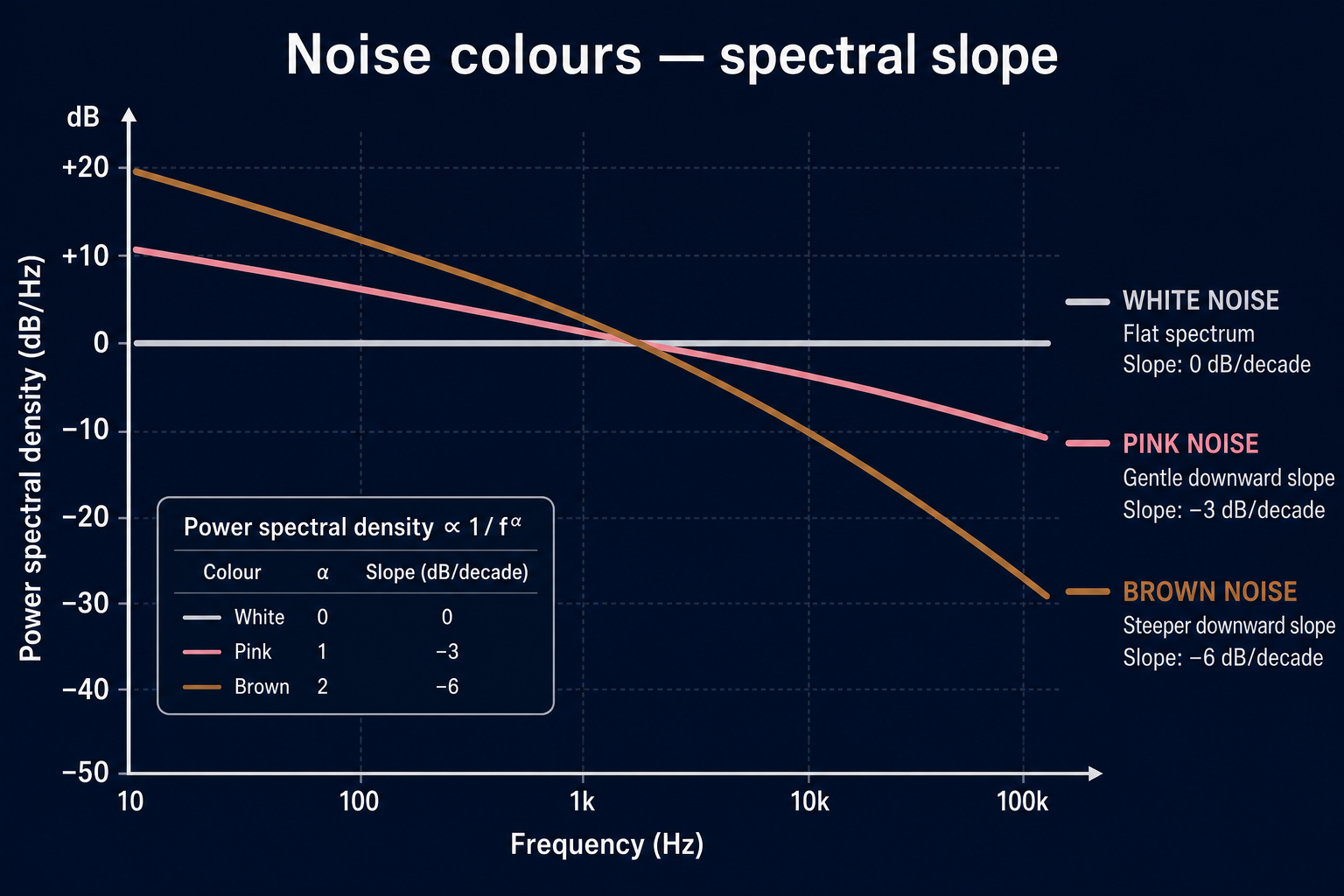
Hospital noise is a documented sleep thief — alarms, doors, staff conversation — with downstream recovery costs.[4] Masking trials in critical care used continuous white noise to reduce awakening from spikes; home versions use softer brown spectra.[5][8]
Setting-specific suggestions
Radiation: immobilisation amplifies claustrophobia — pre-built calm garden on approved headphones if staff allow; breath-paced soft beds. Inpatient: night masking at minimum effective volume. Home recovery: nature organisms for attention restoration between fatigue crashes.[6]
Thoma's autonomic stress data supports short calming listening sessions after difficult appointments — not constant audio dependency.[3]

Coordinate with your team
Oncology distress management includes social work, psychology, chaplaincy, and pain services — NCCN frameworks.[7] Tell your team what you use; avoid claims that sound treats disease. Companion audio supports the human carrying the diagnosis.
Radiation mask claustrophobia and breath hold
Radiation courses impose repeated stillness under noise and enclosure. Pre-breath-hold calm gardens on approved headphones may lower anticipatory arousal — parallel to MRI anxiety literature.[4] Coordinate with radiation therapists; immobilisation devices limit head movement and equipment access. Post-treatment fatigue often needs ultra-soft beds — bright noise colours feel cruel when energy is gone.
Caregiver listening fatigue
Caregivers burn out on hospital noise too — Buxton's sleep fragmentation data applies to chair-sleeping partners.[4] Rotate who wears headphones in room so both get acoustic rest. Thoma's stress markers respond to brief calm sessions — caregivers need recovery, not only patients.
Immunotherapy side-effect weeks
Fatigue and flu-like weeks may invert preferences — silence beats sound. Re-audit gardens each treatment phase. Hospital music therapy departments sometimes lend headphones — ask before buying gear. Ulrich environmental comfort remains relevant across inpatient and outpatient arcs.[6]
Research snapshot and reading list
The numbered references at the end of this page anchor claims in peer-reviewed journals, Cochrane reviews, and institutional guidance — not influencer anecdotes. When a study is labelled "adjunct," it means sound supports comfort or attention alongside standard care; it does not replace diagnosis, medication, surgery protocols, or licensed therapy. Effect sizes in music-anxiety trials are often modest but clinically meaningful at scale — your individual response may be null, positive, or negative. Log outcomes honestly for two weeks before declaring a garden "works." Stop if symptoms worsen. Share this article's references with clinicians when discussing environmental accommodations; citations speed conversations about what evidence does and does not support.
Clinical note: Bring reference list to appointments; cite numbered studies when requesting headphone use during procedures. Hospital policies change — confirm same day.
Save offline gardens before hospital visits — Wi-Fi and cellular often fail in imaging suites and infusion bays.
Charge devices fully before long treatment days.
Sound Bubbles tuning reference (worth learning once)
Master Volume sets the whole room. Start lower than you think — you can always raise one bubble instead of the entire garden.[20][21] Per-bubble Volume is how you balance layers without destroying dynamics: rain can stay audible while brown bed whispers.
Falloff is the secret weapon for speech and spike control. High falloff means only bubbles near the audible core sound "in your head"; everything else feels outside the window — exactly the intelligibility reduction office and sleep literature points toward.[15][25] If a layer feels too present, move it back before turning it up.
TimeLine adds slow environmental change so habituation does not turn your garden into wallpaper.[9][12] Pop anything that announces itself after ten minutes — a good garden should feel found, not performed.
Save & remix: when you find a mix that survives an hour, save it. Public medical and organism gardens are starting points; the best room is usually one you tuned for your desk, nursery, or bedside.
Why this supports Sound Bubbles — not just "any ambient app"
Most ambient apps deliver one file. The studies above rarely study "a loop." They study continuous floors against irregular noise, unintelligible speech against memory tasks, nature scenes against stress markers, spatial streams against glued mashups, and slow environmental change against habituation.[9][14][22][23][24]
Sound Bubbles maps onto those findings deliberately: brown/noise beds for masking floors, nature and library layers for restorative structure, distance/Falloff for speech intelligibility control, and TimeLine motion so the garden keeps the statistics of a place instead of the statistics of a four-minute loop.[12][15][16][25] That is the practical reason the product feels different after the first hour — and the scientific reason the difference matters.
How to apply this inside Sound Bubbles
- Open a related garden (or New Garden) and press Start playing so audio unlocks.[9]
- Expand Shape your soundscape → Sounds: set Master Volume, then Falloff while watching the audible-core guide.[10]
- Select a bubble; drag and scroll depth. Prefer raising one bubble's Volume over blasting the whole room.[11]
- Add library rain, nature, or noise layers; keep speech-like content distant — or remove it — when you need reading or coding focus.[12]
- TimeLine: choose Drift, Tide, or Orbit when you want the garden to keep evolving without grabbing attention.[13]
- Brown Noise tab: shape a warm floor, optionally Release as bubble so it becomes spatial.[14]
- Save gardens that still feel kind after an hour — public gardens should stay soft, not startling.[15]
Limits, safety, and honest uncertainty
We do not claim Sound Bubbles replaces clinical care, licensed therapy, or medical protocols.[16][17] What the product does offer is a listening architecture that matches how hearing and attention actually work: layered sources, spatial distance, and slow change instead of one brittle loop.[18][19]
If sound worsens symptoms, stop. If you need medical advice, see a clinician. If you want a softer room, open a garden, place the bubbles kindly, and stay honest about what sound can — and cannot — do.[20][21]
How this article was researched
We combine first-hand experience placing and tuning Sound Bubbles gardens with citations from peer-reviewed journals, reviews, and institutional pages (including NIH/NCBI, sleep and hearing literature, acoustics, and attention research). Where evidence is mixed or early, we say so. On wellbeing topics we stay cautious: these are companion soundscapes, not cures.
References
Sources cited in this article. Prefer primary literature and institutional guidance; Sound Bubbles is not a medical device and these citations do not imply clinical endorsement.
- (2016). Music interventions for cancer patients. Cochrane Database.
- (2015). Music for postoperative recovery meta-analysis. The Lancet.
- (2013). Music and stress response. PLOS ONE.
- (2012). Sleep disruption due to hospital noise. Annals of Internal Medicine.
- (2005). White noise and ICU sleep. Sleep Medicine.
- (1984). Hospital design and stress. Science.
- (2024). Cancer-related distress guidelines. NCCN.
- (2016). White noise in coronary care unit. Journal of Caring Sciences.
- (2009). Habituation revisited: an updated and revised description. Neurobiology of Learning and Memory. doi:10.1016/j.nlm.2008.09.015
- (2009). Habituation: a history. Neurobiology of Learning and Memory.
- (1990). Auditory Scene Analysis. MIT Press.
- (2010). The free-energy principle: a unified brain theory?. Nature Reviews Neuroscience. doi:10.1038/nrn2787
- (2010). Stress recovery during exposure to nature sound and environmental noise. IJERPH. doi:10.3390/ijerph7031036
- (2021). World report on hearing. WHO.
- (2021). World report on hearing. WHO.
- (2021). World report on hearing. WHO.
- (2021). World report on hearing. WHO.
- (2021). World report on hearing. WHO.
- (2021). World report on hearing. WHO.
- (2021). World report on hearing. WHO.
- (2021). World report on hearing. WHO.
- (2021). World report on hearing. WHO.
- (2021). World report on hearing. WHO.
- (2021). World report on hearing. WHO.
- (2021). World report on hearing. WHO.